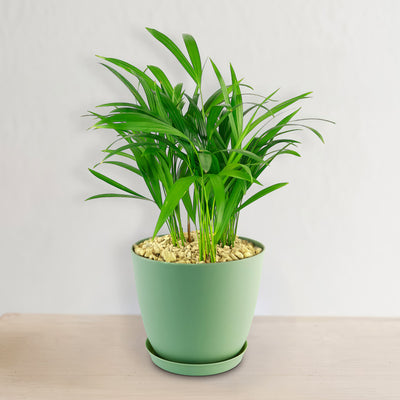
small palm plants for pots Areca Palm ‘Dypsis lutescens’ 2 Gal. / Black / No Pot
SKU: 22830899976
small palm plants for pots

small palm plants for pots Areca Palm ‘Dypsis lutescens’ 2 Gal. / Black / No Pot

Sale price$19.22 Regular price$21.35
Save 10%

Pay in installments of $5.34 with ShopPay, AfterPay and Klarna

Shipping Estimate
USA
  • USA
  • CAN

Ships within 48 hours · Estimated delivery Jun 29 - Jul 4

Promo Codes Available:

For Your Every Summer RSVP, with Code: SUMMER15

Description

small palm plants for pots Areca Palm ‘Dypsis lutescens’ 2 Gal. / Black / No PotKey Highlights Areca Palm Tree Areca Palm grows in dense clumps, with multiple smooth, golden yellow stems emerging from the base and narrow fronds like bamboo leaves, creating a full and bushy appearance. Recognized by NASA, this palm removes toxins like formaldehyde and benzene, improving indoor air quality. One of the most widely grown indoor palms, it thrives in homes and offices, adding a tropical touch with its graceful, feathery fronds. Areca

Key Highlights – Areca Palm Tree

  1. Areca Palm grows in dense clumps, with multiple smooth, golden-yellow stems emerging from the base and narrow fronds like bamboo leaves, creating a full and bushy appearance.
  2. Recognized by NASA, this palm removes toxins like formaldehyde and benzene, improving indoor air quality.
  3. One of the most widely grown indoor palms, it thrives in homes and offices, adding a tropical touch with its graceful, feathery fronds.
  4. Areca Palm can withstand short dry periods, making it relatively low-maintenance.
  5. This palm adapts well to bright, indirect light, requires minimal pruning, and is non-toxic to pets, making it an excellent choice for beginners.

The Areca Palm, known as Dypsis lutescens, is one of the most beloved indoor clumping  palms, known for its graceful, feathery fronds and ability to enhance indoor spaces with a tropical feel. The plant is also known for its ability to improve air quality by filtering out toxins such as formaldehyde and benzene.  Unlike some palms that require extensive care, Areca Palm is relatively simple to grow and responds well to consistent watering and humidity, making it an excellent choice for beginners. 

Native to Madagascar, this palm has gained worldwide popularity as both a houseplant and an outdoor landscape feature in warm climates. Its attractive appearance, air-purifying properties, and low-maintenance nature make it a favorite choice for homes, offices, and commercial spaces. It is also known as a butterfly palm, golden cane palm, and yellow palm. 

Areca Palm is a clustering palm, meaning multiple stems emerge from the base, creating a full and bushy appearance.

The leaves are long, arching, and pinnate, with a lush green color that adds vibrancy to any setting. 

When grown indoors, the plant remains relatively compact, while outdoor specimens can develop into tall, striking features in tropical gardens.

When growing indoors, your Areca Palm typically grows up to 7 feet tall in height, making it an excellent floor plant for homes and offices.

When grown outdoors, this Areca palm tree can reach an impressive height of 30 feet, with a spread of about 12 feet wide. 

Indoor Areca Palms rarely bloom, but outdoor plants may produce small, yellowish-white flowers from late spring to summer. These flowers grow in clusters along the base of the fronds and are followed by small, oval-shaped fruits that transition from green to yellow and eventually turn black when fully mature. The fruits contain seeds but are not typically used for propagation, as division or offsets are preferred methods for growing new plants.

Recognized by NASA’s Clean Air Study, Areca Palm helps remove toxins like xylene, toluene, and carbon dioxide, improving indoor air quality. This palm releases moisture into the air, making it ideal for homes with dry air, especially during winter. 

When and How to Water Your Areca Palm

The Areca palm is drought-tolerant once established, making it an excellent choice for those looking for a low-maintenance tropical plant. While it prefers consistent moisture, it can survive short dry spells without severe damage. Overwatering is a more significant risk than underwatering, as excessive moisture can lead to root rot. Ensure the soil dries slightly between waterings to maintain the right balance. 

In the spring and summer, during its active growing season, the Areca palm tree requires more frequent watering. In warm temperatures, watering once every 5–7 days is ideal, depending on humidity levels. If it is grown outdoors, rainfall can supplement its needs, but manual watering should be adjusted accordingly. Always check the top 1–2 inches of soil before watering to prevent oversaturation. 

In fall and winter, when growth slows down, the watering frequency should be reduced. Watering once every 10–14 days is sufficient to prevent dehydration while avoiding waterlogging. Indoor plants may require slightly more frequent watering if exposed to dry air from heating systems, so monitoring humidity levels is essential. 

Light Requirements – Where to Place Your Areca Palm Tree 

For indoor growth as a houseplant, your Areca palms thrive in bright, indirect light for at least 4-6 hours a day.

A location near an east- or south-facing window with filtered sunlight is ideal. It can tolerate lower light conditions, but growth may slow down, and the leaves may become less vibrant.

To promote healthy foliage, rotating the plant occasionally ensures even exposure to light.

Artificial grow lights can also supplement light if natural brightness is insufficient.

For outdoor cultivation, the Areca palm tree prefers partial to full sun, requiring 4–6 hours of bright, indirect light daily.

Morning sunlight is ideal, while intense afternoon rays may scorch the fronds, especially in hotter climates. If grown in a container, moving it to a shaded area during peak summer months can prevent leaf damage. 

Optimal Soil & Fertilizer Needs 

Areca palms grow best in well-draining, slightly acidic to neutral soil with good aeration. A high-quality potting mix with peat, sand, and perlite ensures proper drainage. Planet Desert has specialized potting soil that includes an organic substrate with mycorrhizae to help with the growth of a healthy root system to help your succulents thrive.

A balanced liquid NPK fertilizer at a 5-10-5 ratio applied once a year in the spring during the growing season promotes lush foliage and robust growth. Slow-release palm fertilizers with essential micronutrients like magnesium and iron also help prevent yellowing leaves. During the dormant season, fertilization should be stopped to avoid unnecessary growth that may weaken the plant in cooler months. 

Hardiness Zones & More 

When growing indoors as a houseplant, the Areca palm plant thrives in temperatures between 65–75°F with humidity levels above 40%. Dry air can cause leaf browning, so misting or using a humidity tray can maintain optimal moisture levels. Avoid placing the plant near cold drafts or heating vents, as sudden temperature fluctuations can cause stress. 

For outdoor cultivation, Areca palm is hardy in USDA zones 10–11, thriving in warm, humid conditions.

It can tolerate brief temperature drops but should be protected from frost.

The ideal outdoor humidity level is 50% or higher, making it best suited for tropical or subtropical environments.

For those in cooler climates, container-growing allows for seasonal relocation indoors. 

Wildlife – Areca Palm Flowers Attract the Following Friendly Pollinators 

The Areca palm produces small, yellowish-white flowers that attract a variety of pollinators such as bees, hummingbirds, butterflies, and other beneficial pollinators. While not a primary pollinator plant, its presence in a tropical garden can support local insect populations.

Butterflies
Bees
Hummingbirds
Lady Bugs
Multi Pollinators
Other Birds

According to the ASPCA, the Areca palm is non-toxic to humans, cats, dogs, and birds, making it a safe choice for pet owners. Unlike some palms that pose toxicity risks, Areca palm does not contain harmful compounds that could endanger household animals. 

How to Propagate Areca Palm 

Areca palms can be easily propagated through division or by planting seeds. To propagate through division, carefully separate the offshoots from the main plant and replant them in well-draining soil. Root division is best done in spring or early summer when growth is most active. If propagating from seeds, soak them in warm water for 24 hours before planting them in a mixture of peat moss and perlite. Keep the soil consistently moist and provide bright, indirect light for optimal growth.

The Bottom Line 

Overall, the Areca Palm (Dypsis lutescens) is a stunning, easy-to-care-for plant that thrives both indoors and outdoors. It is a clustering palm tree with multiple stems, produces a full, bushy appearance with long, arching, pinnate leaves in lush green, adding vibrancy to any setting. Its elegant fronds, air-purifying benefits, and adaptability make it a favorite among plant enthusiasts. Whether placed in a bright living room corner, an office, or a tropical garden, this palm adds beauty and a refreshing touch of greenery. With its elegant feathery fronds, ability to purify air, and pet-friendly nature, it’s a popular choice among plant enthusiasts. Proper care, including adequate watering, indirect sunlight, and occasional fertilization, ensures vibrant growth and longevity. Order your very own Areca Palm for sale today! 

Shipping Notes
  • Free Standard Shipping on $100+ Orders to the USA.
  • Except Preorder products are shipped in 48 hours.
  • Delivery to the USA:
  1. Standard Shipping : 3-10 business days
  • If time is of the essence, please consider selecting expedited delivery for faster service.
Exchange/Return Notes
  • We offer a 30-day return/exchange service after receiving.
  • Final sale items are not eligible for returns or exchanges.
  • To process your return/exchange, please contact us at [email protected]
  • Please click here for more details>>> Return & Exchange Policy
SKU: 22830899976

Discover Niche Categories That Outsell small palm plants for pots

Top-Converting Item to Boost Your Average Order

4.4 ★★★★★
Based on 367 reviews
Sort
Highest Rating
Newest First
Oldest First
Product Reviews
C
Verified Purchase
Caroline Elizabeth Garcia
New York, US
★★★★★ 5
This book is a grace…
Format: Paperback
In a world increasingly characterized by noise-from the actual noise of electric gadgets & gizmos to the societal noise of online activity, constantly refreshing posts & pages, & opinions at the ready on everything happening all the time-this book is a breath, an exhale, a pause. Sarah Clarkson offers not a ready-made formula for navigating the online world or strategies for self-care, but an invitation to explore, alongside her, another way of being, a world where deep, soul-healing quiet is available. She uses her own story to ask universal questions of origin, design & relationship with our Maker. You don't feel when reading that you're sitting under the teachings of a lofty, "arrived" guru, but that you're taking the extended hand of a fellow traveler as you walk home together. Sarah's writing is a companion, a warm conversation over tea & a deeply enriching exploration of life with God & at peace with ourselves. Engaging, academic (yet readable), inspiring & kind. Welcome to Sarah Clarkson's beautiful writing-a gift. I am *so* pleased she has decided to share with the world.
WAS THIS REVIEW HELPFUL?YesReportShare
Reviewed in the United States on November 5, 2024
E
Verified Purchase
E. Maley
Alexandria, US
★★★★★ 5
Devotional classic for our time
Format: Paperback
“I’ve always borne a hunger for something that seemed as distant as starlight and as wide as the night sky itself. I want the world and what is behind it, the potent beauty it simultaneously reveals and veils. I think we all do…” If you can feel the intensity of this hunger in your own life and wonder how to acknowledge it in the midst of too-busy lives and a myriad of distractions, you will be inspired to rest within the tension of this by "Reclaiming Quiet”. Sarah Clarkson has followed her previous study of God’s goodness, This Beautiful Truth, with this soothing expression of our need for quiet in order to experience the extraordinary. Using a similar narrative of personal memoir and spiritual discovery, she describes her own journey towards being satisfied with the quiet of the ordinary. She writes of how the distractions inherent in our world, while ostensibly a quest for the extraordinary, can actually lead us in the opposite direction, and how learning to cultivate quiet is so necessary. “Quiet in this world; perhaps is most often the vessel that bears us out of darkness and into hope." Each chapter closes with a gentle prayer and an invitation to ponder our own discoveries through thought-provoking questions relating to what we’ve just read. Reclaiming Quiet is surely destined to be a devotional classic for our time. I read an advance copy but I’ve already pre-purchased copies to give away and I’m planning to reread Reclaiming Quiet as a personal devotional study, but it would also be perfect as a group read/ study.
WAS THIS REVIEW HELPFUL?YesReportShare
Reviewed in the United States on November 5, 2024
B
Verified Purchase
bdb.seb
Port Orchard, US
★★★★★ 4
Lovely
Format: Paperback
"Because God does not change and his kindness does not end, though the mountains shift and whole worlds crumble, and to actually believe this means to live a different kind of life from one tossed and overturned by news of every new disaster." Love the Clarkson family's books and stories. Such a wonderful way with words. I disagree with some of the theology but still consider this a good read.
WAS THIS REVIEW HELPFUL?YesReportShare
Reviewed in the United States on December 4, 2024
D
Verified Purchase
Debilea
Dallas, US
★★★★★ 5
Attending to the inmost places of our heart
Format: Paperback
Sarah Clarkson’s newest book, “Reclaiming Quiet” is a masterful journey into the heart of what it means to be quiet before the Lord. I was hooked by the foreword and by the end of the first chapter, I was thinking of numerous friends I wanted to share this book with. We live in a noisy, attention-distracting world and it’s far too easy to get sucked into one activity after another without one thought of being still, of finding the rest and restoration that our mind, body and soul crave. Sarah’s writing draws the reader in with the loveliest of vignettes from her life as a Vicar’s wife, mother of 4 and author. Her writing is lyrically gorgeous-each story comes alive by her excellent word choice and vivid descriptions. She shares her struggles with OCD and really gets to the heart of what it means to find quiet in the midst of the busyness of each day. This is not a how-to or another step-by -step book, but more of a path that will guide the reader into thoughtful pondering of what it means to be still -to make time to sit quietly and commune with our Creator. A favorite quote from her book: “One of the great gifts that comes to us when we choose to step away from the chorus and listen to the Holy Spirit, is a capacity for conviction and courage. We need to attend in the inmost places of our hearts, where God speaks…We need to listen from the inside.” Reclaiming Quiet would make an excellent book club selection for a small group or to explore on your own-you won’t be disappointed. I can see this becoming a bestseller.
WAS THIS REVIEW HELPFUL?YesReportShare
Reviewed in the United States on November 5, 2024
P
Verified Purchase
Paul
Pawtucket, US
★★★★★ 5
American Bullies at Bretton Woods
Format: Hardcover
There, I said it, and I am an American. I had heard of the conference but never read about it, and certainly had never heard of Harry Dexter White, but this book goes to great length to explain what happened in this important meeting as World War II was drawing to a close and a plan needed to be developed for a new world order regarding the flows of money to facilitate trade and avoid economic disruptions that the world had seen far too much of. Steil presents more information on John Maynard Keynes than his American antithesis, Harry Dexter White, and for good reason. Keynes was simply one of the most, if not the most, brilliant intellectuals of the 20th century. His theories of economics were evolving through his life, but he is most remembered for his idea that government stimulus could help alleviate a faltering economy when the private sector failed to do the job, and he was opposed as he said to the "gold cage" that for years had been the standard of international finance. He had a biting wit, coupled with a superior intelligence that far outshone his meager appearance (he was ugly, and knew it) but he was cast in the role of a diplomat to present the case for England as the world entered the post war period. The problem was that England was broke. She had endured two world wars in the space of 30 years and the empire was begging for funds from Washington, and most of her debt to the US from the Great War was still unpaid. She also had an enemy in FDR, who was determined that the imperial preference of England after the war was to be no more. Her crown jewel, India, was pressing for independence and the empire was in the process of unwinding, as was the strength of the British sterling. Keynes pressed to have the new institutions of the World Bank and the IMF located in London, and the Americans under the leadership of White simply said "hell no." Enter Harry Dexter White. The name is as deceptive as the individual. He was a son of Jewish immigrants, graduating from Harvard late in life, but brilliant in his intellect and determined that America would rule by the strenght of the dollar and Britain was to be no more as a world power. It was interesting to me to see the Treasury Department so powerful over this whole thing. You may think that the Department of State would have more of an influence because these were important global decisions, but their input was minimal. Regardless, White was a Soviet sympathizer and was just in the process of getting raked over the coals when he died early after the war from a heart attack. Keynes also died at the age of 62, not long after the war. The world remember Keynes and White is more of a footnote. I personally did not like White. He reminded me of a Himmler with his rim glasses and nasty litte mustache. As for his boss, Henry Morganthau, Secretary of Treasury, he was little better. His idiotic plan to strip Germany of all industrial capability after the war and turn it into a nation of small farms was leaked to the press and Goebbels made hay of it, likely resulting in many more American casualities toward the end of the war. Just goes to show that FDR used some strange people in his administration. Thank God his selection of generals was far better. America was brutal toward the British at Bretton Woods. We often think of the English speaking peoples uniting and working together in true harmony to defeat the fascist nations. That is a myth and this book helps bust it. It shows to me how inhuman America was to our British allies, who bore much of the battle of this war alone, with little hope of survival. It is said that when Winston Churchill learned of the attack on Pearl Harbor, he knew that England would win the war and when he retired, he slept like a baby. Little did he know that the selfishness of the U.S. government would put a boot on the neck of England after the war. Churchill once said that the Germans were either at your throat or under your foot. The later part of that pertains to the American response to England toward the end of the war and after. A good book. Great information, and highly recommended.
WAS THIS REVIEW HELPFUL?YesReportShare
Reviewed in the United States on March 9, 2013

recommand products